
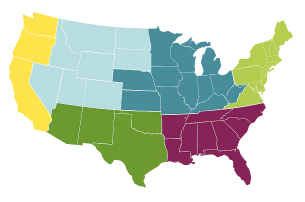
How do we use your location?
Knowing your location helps us recommend plants that will thrive in your climate, based on your Growing Zone.


| Buy More, Save More | Bulk Discount |
|---|
* There is a 1 packet minimum required for this item.
Ice Plant is the bright-flowered groundcover so common and loved on the West Coast, but hardly known at all in the east. Its a succulent, a lot like a short Sedum, but the flowers are the big thing--look at those sizzling hot pink daisies. Everybody loves them, and the plant spreads rapidly with trailing runners.
Why are these plants so popular out west? Visit the Pacific coast, all the way from San Diego up to Seattle, and you'll see these little bright daisies everywhere--edging walks, filling planters, and adding great color under foundation plantings. Why don't we see them more in the east? See the story below, and get some going in your garden! Pick a site with full sun and gritty, sharp-draining soil, and add them to your garden. You'll be amazed at the big show!
The Ice Plant story. Garden expert Todd Boland, a horticulturalist at The College of the North Atlantic, in Newfoundland, explains it all in one of his articles at DavesGarden.com. It seems a famous garden expert named Panayoti Kelaidis of the Denver Botanical Garden is almost single-handedly responsible for introducing these beauties to the US. They are from South Africa, and Mr. Kelaidis traveled there to find new plants suitable for growing in the dry, gritty soils of our western states. The Delospermas he introduced are now great favorites, especially in California. But as Mr. Boland points out, there's no reason eastern and mid-western gardeners cant enjoy Ice Plants. Mr. Boland actually brings D. cooperi, one of the most cold-hardy, through his wet cold winters in Newfoundland, so don't worry about the plants hardiness!
The name? They're called Ice Plants because the succulent leaves produce clear crystals that glint in the sun and sometimes seem to appear as frost.
As soon as your order is placed you will receive a confirmation email. You will receive a second email the day your order ships telling you how it has been sent. Some perennials are shipped as potted plants, some as perennial roots packed in peat. The ‘Plant Information’ section describes how that item will ship. All perennials and fall-planted bulbs are packaged to withstand shipping and are fully-guaranteed. Please open upon receipt and follow the instructions included.
Perennials and fall-planted bulbs are shipped at the proper planting time for your Growing Zone. Perennial and fall-planted bulb orders will arrive separately from seeds. If your order requires more than one shipment and all items are shipping to the same address, there is no additional shipping charge. See our shipping information page for approximate ship dates and more detailed information. If you have any questions, please call Customer Service at (802) 227-7200 or contact us by email or chat.


