
How do we use your location?
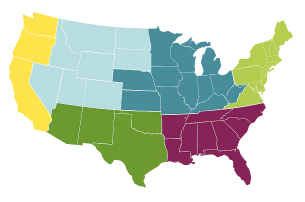
Knowing your location helps us recommend plants that will thrive in your climate, based on your Growing Zone.
| Buy More, Save More | Bulk Discount |
|---|
* There is a 1 packet minimum required for this item.
Common Milkweed (Asclepias syriaca) is a handsome, straight plant you see in every farm field and growing wherever a roadside hasn't been mowed. Leaves are glossy and thick, and the blooms are large, rounded clusters of purplish/pink flowers atop plants that range from 2 to 5 ft. It's native in the US from Canada to Georgia, and west to Texas.
The botanical name, "Asclepias"; is after Aesclepios, the Greek God of medicine, since this plant has been used as a medicinal since ancient times. "Milkweed" derives from the fact that when you break a stem, sticky white sap immediately appears. Common Milkweed is one of our commonest "weeds," but one almost all wildflower gardeners want.
This is the plant famous for its "silky seeds" in fall, when you see the drying cone-shaped seedpods crack open and their snow-white shiny fluff flying around the meadow. This is the dispersal mechanism for the large shiny seeds of common milkweed. Every kid loves to blow them away in fall, like dandelion seeds in spring.
Even though farmers hate milkweed, you'll love it in your wildflower garden...for two reasons. It's beautiful and dependably perennial, and it's the No. 1 plant visited by Monarch butterflies on their famous migration south every summer and fall. In fact, during late summer, it's somewhat rare to see a milkweed plant without a monarch perched upon the flowers, making it the No. 1 butterfly magnet among our wildflowers. ("Butterfly Weed" is a close relative, with bright orange flowers.)
Native Range for Asclepias syriaca (Common Milkweed) - AL, AR, CT, DC, DE, GA, IA, IL, IN, KS, KY, LA, MA, MD, ME, MI, MN, MO, MS, MT, NC, ND, NE, NH, NJ, NY, OH, OK, OR, PA, RI, SC, SD, TN, TX, VA, VT, WI, WV.
As soon as your order is placed you will receive a confirmation email. You will receive a second email the day your order ships telling you how it has been sent. Depending upon your order date, we may hold your shipment to combine it with other products on your order, if applicable. See our shipping information page for approximate ship dates and more detailed information. If you have any questions, please call Customer Service toll-free at (802) 227-7200 or contact us by email or chat.

Overall rating: 4.1538463 / 5 from 13 reviews.
Review topics: [].
"Planted for the monarch butterflies and other pollinators in our volunteer meadows. Used the meadowscaping information provided from American Meadows. Highly recommended all of your seeds. Please include this review for the sweepstakes!"
"I have used all the seeds in the wildflower meadows in restoring the fields in mokena. As a volunteer for these projects in the last 3 years enter in sweepstakes"
"The seeds arrived in a timely manner. I waited to plant that until the specified time period on the package. The seeds did start to germinate but then the plants did not grow. I believe the fault is my soil and not the seeds. I will be ordering more milk weed seeds in the future."
"Planted wk of Oct 17, 2022. Planted in clay soil and in location that has direct sunlight until late May/Early June at which time more dappled sunlight. No evidence of plants growing. Each seed location was marked. Area now covered with pokeweed, snakeroot, etc. Very disappointed"
"I just finished writing an excellent review to you folks about you Northeast wildflower mixture. But at the same time II planted the wildflower seed I planted the milkweed. The wild flowers did exceptionally well but unfortunately I can't find a single milkweed plant. I am so happy with American Meadows with respect to the wildflowers . I will probably try again at the end of this growing season to plant milkweed. Could it have been a bad batch of seeds? or bad planting technique?"
"We had a terrible spring here and although it was warm when I put them outside,none survived. I believe it was a combination of bugs and rabbits."
"Started slow and we weren't sure of it being the first year. We are confident next year it will even be more beautiful and useful to the Butterflys and Bees."
"All the negative reviews I read did not mention cold stratification. In my experience Asclepias need this cold period in order to germinate. Follow the instructions on the plant page for best results! A little hard to get going, but once established it is hardy and long-lasting. It is a big plant, with large leaves. Very coarse texture in the garden. Pollinators all seem to love it."
"helps my goals to increase monarchs"
"Recently planted my seeds and they have just sprouted."


