
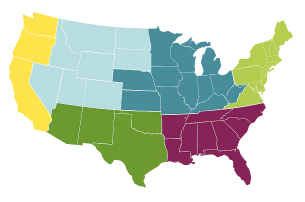
How do we use your location?
Knowing your location helps us recommend plants that will thrive in your climate, based on your Growing Zone.
| Buy More, Save More | Bulk Discount |
|---|
* There is a 1 packet minimum required for this item.
This delicate desert plant blooms almost overnight with one of the richest, inky-blue flowers in the plant kingdom. Of course, it is drought-resistant, but responds to normal rainfall and watering, forgetting all about its desert home. Also called Desert Bell, or Desert Bluebell, this little wildflower is a treat for Easterners and Midwesterners who have rarely seen it. Along with wild baby’s breath (Gypsophila elegans), this is the very earliest bloom in newly-seeded meadows.
As soon as your order is placed you will receive a confirmation email. You will receive a second email the day your order ships telling you how it has been sent. Depending upon your order date, we may hold your shipment to combine it with other products on your order, if applicable. See our shipping information page for approximate ship dates and more detailed information. If you have any questions, please call Customer Service toll-free at (802) 227-7200 or contact us by email or chat.

Overall rating: 4.2 / 5 from 5 reviews.
Review topics: ["flowers","plants","establishment","factor","germination"].
"Native flowers for my xeriscape garden in California. Besides being beautiful and using VERY little water, these beautiful native flowers are best for our local bees, butterflies, birds and all wildlife here benefits from the planting natives. I plant them with the taller Lacy Phacelia (which are a favorite of all bees here) and EARLIER than my other annuals because they tend to germinate between 55-65 F. degrees. That means getting them in the ground a week to a month BEFORE my other natives like our CA poppies, local Penstemons, Nemophilas and my other faves the ticolor and globe gilia, just to name a few."
"These came in a wildflower mix I sowed for 2015's spring and they were the BEST of all the varieties in the mix. Not only were they rabbit and hare resistant (unlike 90% of the other seeds in that mix), but they thrived in my untreated crushed granite soil with just a light sprinkling a week of water. I forgot to buy seeds in time for this year (2016) and was very pleasantly surprised to find more California Bluebells here than last year!! These beautiful gems with the most AMAZING color reseeded! I am going to buy more and cover my hill with them. The neighbors below me are hoping they make their way down. They truly are stunning and they seem to prefer sprouting/growing next to rocks or larger plants (such as my native desert marigolds and ragwort)."
"I mass planted this over a large area and got very little successful establishment. I think there are a few relevant factors behind my poor luck: 1) a much colder/wetter/longer spring than normal; 2) I planted it pre-maturely; 3)germination rates maybe a little low; 4)it doesn't seem all that competitive when planted with other species. I'm trying it again this coming year and will modify planting plans somewhat. One critical factor here in the Maritime Northwest seems to be spring planting -- unlike some of our other annuals that do fine when fall planted."
"A lovely plant. I didn't get as many as I'd hoped for the first year so those that germinated and bloomed were treasured all the more. I will plant more this year, knowing that the germination rate is on the low side."
"I started a pot of California Bluebell in my greenhouse. Germination was almost 100% in just four days. I can't wait to see these bloom!I'll be planting a 80'x80' plot shortly for early forage for my Honeybees. gerrynavarre[@]"


