
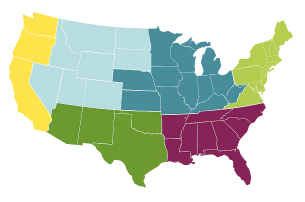
How do we use your location?
Knowing your location helps us recommend plants that will thrive in your climate, based on your Growing Zone.
| Buy More, Save More | Bulk Discount |
|---|
* There is a 1 packet minimum required for this item.
Lacy Phacelia, or Phacelia Tanacetifolia, is a drought-tolerant cover crop that blooms in the summer months. The light-purple blooms are unique and elegant, attracting beneficial pollinators to the property. This annual grows to be about 24-26” tall and prefers as much sun as possible. We recommend spreading 7 pounds of Lacy Phacelia per acre.
As soon as your order is placed you will receive a confirmation email. You will receive a second email the day your order ships telling you how it has been sent. Depending upon your order date, we may hold your shipment to combine it with other products on your order, if applicable. See our shipping information page for approximate ship dates and more detailed information. If you have any questions, please call Customer Service toll-free at (802) 227-7200 or contact us by email or chat.

Overall rating: 4.5384617 / 5 from 13 reviews.
Review topics: [].
"I seeded my entire 250' courtyard with this last year. Not one. Single. Plant. Not last year, not this year. Extremely unhappy."
"I planted these alongside some other seeds. What I did not expect is how quickly they grow and how big the plants get. They quickly took over our seed bed however it was a beautiful surprise. All of the pollinators absolutely loved the purple blooms! Will defintaley grow these again but use the seeds sparingly or plant them on their own!"
"I am using these flowers to suppress unwanted weeds in my field. As a bonus, they are beautiful, good for the soil and the bumble bees love them."
"Per Wikipedia: "The seeds are "negatively photoblastic", or photodormant, and will only germinate in darkness " so, don't "sprinkle the seeds around" they really have to be in the dark, so plant each seed or make sure you germinate them in a dark area or dark room. Unlike Poppies which need LIGHT to germinate these are just the opposite. I am in Phoenix AZ and these are a good plant for the area."
"The honey bees, the butterflies, the bumble bees, and the hummers all love this! What a workhorse! I plant this wherever I want to encourage pollinators, especially around the fruit trees and mixed into a long flower strip that runs down my field garden. And I plant bits of it around the house so I can watch everyone up close."
"Absolutely love these, everyone stops and ask what they are. I was introduced to them in one of the wildflower mixes. These will definitely be on my list for next year. Only con is I wish they were perennials"
"Rampant Good wildflower"
"I purchased these on a whim, I knew a gentleman from Oregon who had started a company called Seeds of Change, wondered if it was his company. In any case I noted on the seed packet that they where perennial which I prefer. Now I know they are not perennial, which is a good thing because every seed germinated and I planted every one. I will have to collect the seed and scatter next year a bit more selectively because I have a wild mess with the cosmos, bachellor buttons, Amaranth, godetia, callendula, roses, sunflowers, monarda, and tomatoes . . . along with the lady phacelia. Didn't see as many hummingbirds working it as I did bees! Last year I didn't have many bees so I was pleased to see them come from far and wide to work my plants! From the past comments I believe I had such good germination because I gave them a heat pad. I think I will only cut this plant in a scatter garden because they do tend to dominate. I really appreciated the delicate sent in the evenings when I am out hand watering. Plus if I don't have them next year I am sure the bees will come to tell me how much they miss them!"
"last summer was my 1st try with this, after reading how valuable it was for pollination. I kept thinking it wasn't germinating when I didn't see anything, so I'd throw out more. Then. . . . there was LOTS, I'm hoping it will reseed by itself this year. The lacy foliage is very attractive. I cut some back when it got leggy, but that probably prevented seed setting. I think it would be great to throw into a garden that needs pollinators. I also gave out little seed packets to people. there is othing bad to say about this except when it is going to seed,but by then other things are filling in my meadow gardens."
"This was lightly scattered on a CRP-42 plot. Excellent outcome for honeybee production. QUESTION: Will this reseed itself in Northern Illinois?"


