
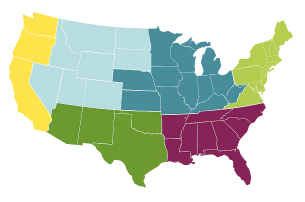
How do we use your location?
Knowing your location helps us recommend plants that will thrive in your climate, based on your Growing Zone.
| Buy More, Save More | Bulk Discount |
|---|
* There is a 1 packet minimum required for this item.
"Rocky Mountain Bee Plant" is a really beautiful wildflower that is one that was "discovered" by Lewis and Clark in 1806 on their expedition into the American west. Today, more and more gardeners are discovering it too. It's really a desert plant, so has great drought resistance, and you'll love the large bushy plant it makes--almost like a shrub, covered with its stunning big purplish/pink flowerheads. A great native plant for the meadow or the back of the perennial border.
Read our Member's Meadow story about how Martha Brodkey in Nevada discovered "RMBP" along a desert highway, then found the seeds and now grows them to perfection at her high desert home near Lake Tahoe.
As soon as your order is placed you will receive a confirmation email. You will receive a second email the day your order ships telling you how it has been sent. Depending upon your order date, we may hold your shipment to combine it with other products on your order, if applicable. See our shipping information page for approximate ship dates and more detailed information. If you have any questions, please call Customer Service toll-free at (802) 227-7200 or contact us by email or chat.

Overall rating: 3.6 / 5 from 5 reviews.
Review topics: ["plants","period","moisture"].
"I've read some of the comments about poor germination. The seeds need about 10-12+ weeks exposed to moist cold. Those in southern states should mix seed with moist sand and refrigerate. In my location, I wait until snow covers the ground, pull back the snow, scratch the dirt, sow and re-cover with snow. This plant is native to my area."
"To add color to area with bachelor buttons"
"I cannot remember where I purchased my original seed, but I have had this plant coming back with vigor for five or more years. It quickly grows taller than me and is covered with flowers and bees! I do not water it AT ALL, but it does grow tallest over my leach field. After it blooms, it dies and leaves large woody plants that need to be removed. That can present a problem if you don't have lots of room for disposal. We have hot, dry summers at an altitude of 4800 feet. I have clay soil."
"I lived in Arizona and was a beekeeper there. This plant produces both quantity and quality honey. However, it is important to note that germination does not happen every year. Sometine the seeds would be dormant for 3-4 years before germinating in the same location. I think a long period of moisture during the germinating period is essential. I now live in Georgia and have not been successful in getting the plants to grow. Will try again in 2011 using different procedure - wish me luck."
"The seeds appear to be healthy and consistent and I have 0 germination as far as I can tell. I live in Aurora Colorado (just east of Denver) and as far as I can tell this plant is supposed to grow here. I planted many seeds in several ways, hand scattering on broken soil, hand scattering along an the border of an unused "wild" urban road, in cut rows, in pots, inside and outside and I see nothing approaching germination anywhere. I doubt very much that this is the fault of American Meadows, rather it's got to be my soil or location. Something. 1/4 pound and 0 plants though is a little irritating."


