
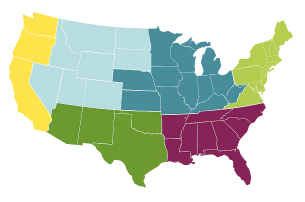
How do we use your location?
Knowing your location helps us recommend plants that will thrive in your climate, based on your Growing Zone.
| Buy More, Save More | Bulk Discount |
|---|
* There is a 1 packet minimum required for this item.
Like perennial blue flax, annual scarlet flax seed is shiny, a clue to the fact that flax seed is used to produce linseed oil. This species, with brilliant red petals often edged in black, is a close relative of the flax used to produce linen. (Note both “linen” and “linseed” derive from botanical name, Linum.) See related species, Blue Flax, Linum perenne lewisii.
As soon as your order is placed you will receive a confirmation email. You will receive a second email the day your order ships telling you how it has been sent. Depending upon your order date, we may hold your shipment to combine it with other products on your order, if applicable. See our shipping information page for approximate ship dates and more detailed information. If you have any questions, please call Customer Service toll-free at (802) 227-7200 or contact us by email or chat.

Overall rating: 4.1666665 / 5 from 12 reviews.
Review topics: [].
"I tilled 8,000 square feet twice, once in fall and once in spring. Then sowed seeds in early May. the scarlet & blue flax were combined and sowed a bit more coverage than recommended in the hopes that would blot out the weeds. The weeds beat the flower seeds so none of these flowers produced anything. I'm not sure what I may have done wrong. I'm hoping maybe some might show up next year?"
"I plants half of my seed order as instructed in June and kept it watered as required. No plants grew."
"Can I make a linen towel using Scarlet Flax?"
"I do not have flowers yet , but the flax are doing well. A dish of beer caught 3 slugs that might have caused damage. 9 volunteer sunflowers are 3 feet tall and should add to the big display of scarlet flax I am looking forward to seeing. The free wildflowers you sent I put around the flax. They are fine."
"I planted these en masse in a full sun area and two partial shade areas (since the description says "shade tolerant"). The flowers are pretty, but smaller than I thought, perhaps an inch across. Each plant has only a few flowers at a time. Most importantly, the plants are kind of "sparse". The foliage is leggy, perhaps a foot tall on a sturdy stem, but the main stem doesn't branch out much. You might be able to compensate by planting them together densely, but I didn't do this because I was afraid to overcrowd. I think these would look better as part of a mix, where other bushier plants could fill in the "dead space" between these plants. The plants in the shade had dramatically fewer flowers than the ones in full sun. I would not recommend these for partial shade. Fun sun only."
"I live in SW Arizona where it is extremely hot in the summer and I have a lot of clay in my soil. This plant came with a mixture bloomed the first time and did very well. I collected the seeds and threw them back into the area where the original ones bloomed It has reseeded and now in the second is doing well. The wind has blown seeds into my garden area in the gravel area around the raised beds and they are blooming and look so wonderful. The color is such a beautiful red color. I truly love this plant."
"I bought a wildflower mix that has flourished in an area which was formerly a chicken coup. These are especially striking. Very lovely."
"These are part of several smaller wild flower gardens around my house. They germinate easily and grow well. I am located in SW Florida south of Sarasota so have lots of sun and rain in summer. ."
"plants have come up but no blooms yet, so I'm looking forward!"
"I planted this for this summer and it is growing but hasn't bloomed yet. . . . will add a comment when it flowers."


