
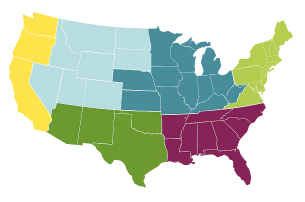
How do we use your location?
Knowing your location helps us recommend plants that will thrive in your climate, based on your Growing Zone.


| Buy More, Save More | Bulk Discount |
|---|
* There is a 1 packet minimum required for this item.
This daisy, which is native to mountain areas in Western Europe, is somewhat larger and taller than our common wild (Ox-Eye) daisy, C. leucanthemum. It is also less aggressive, thus useful where the common wild daisy can become a pest. A favorite species of meadow gardeners, since these daisies create an unforgettable vision of beauty in full meadow bloom, waving in the wind.
As soon as your order is placed you will receive a confirmation email. You will receive a second email the day your order ships telling you how it has been sent. Depending upon your order date, we may hold your shipment to combine it with other products on your order, if applicable. See our shipping information page for approximate ship dates and more detailed information. If you have any questions, please call Customer Service toll-free at (802) 227-7200 or contact us by email or chat.

Overall rating: 4.571429 / 5 from 14 reviews.
Review topics: ["germination","seeds","daisies","eye","grew"].
"The first year I could see them coming up (knowing what to look for) but nothing happened. The second year they emerged and flowered. I planted large swaths of them. Some areas didn't take, but the ones that did are beautiful. Definitely plan to be patient with these!"
"Shasta Daisies have been a salvation for me. They thrive in the hottest sun. They come back bigger every year. They are immune to every pest: deer, rabbits, bugs, mildew. And they are an especially pretty daisy. (I buy the 3" pots, not the seeds. )"
"The yard is sloped, drastically in some areas, and some genius many years ago put down landscape fabric and I've been doing battle with that for about four years. While I try to sort out the intriguing and potentially lovely mess that is my sloped yard, I figured I'd toss down wildflower seeds to see what sticks. And I like daisies and Siberian irises. I was not sure if the daisies would bloom the first year (they don't. They come up, look weedy and leafy and make your husband give you massive side eye about what's going on out there the first year. ) But this year? Daisies, everywhere. Because of the nature of our slope, those daisies were not all exactly where I had intended to plant them, so I had to replant some of them and they seem to have taken the move well. We'll see how it goes, but given how I didn't have a great plan or soil to start with, I have to say seeing the daisies and the irises blooming simultaneously in one corner of the yard made me sure look like I had a plan. It was gorgeous."
"I ordered the Shasta Daisy seed last spring, 2021. They emerged, but didn't have enough time to fully mature. Now, in March, they look strong and healthy. Can't wait to see the flower heads soon. Be patient with them."
"All my other seeds flourished."
"These grew very well in the rough soil of NC. They thrived in half sun/half shade area I planted them. They were strong and came back again and again."
"I replaced some of our lawn with beds and planted these in them. The area is full sun and I don't water it all that much. The germination was great and I had lots of small 6 inch whorls of leaves but not a single flower. I think the description of theses should be modified to indicate that they will likely not bloom until their second year. Other than that, I am hopeful that they will return and bloom in their second year."
"Despite the fact that I did not prepare the ground properly, I got quite a few tall, healthy daisies."
"Once established in the field (2-3 years) iconic Shasta Daisies become favorite long-blooming perennial wildflowers. Grown from potted plants and/or seed these daisies blend with coneflowers, black-eyed Susans, salvia, Russian sage, liatris, blanket flowers, coreopsis, Sweet William, yarrow, lupine, grasses, and more, to form near maintenance-free naturalized meadows or gardens. Transplanted clumps survive and thrive with little additional care. Patience is needed if planted from seed."
"I paired these with a few established plants for the best of both worlds. I now have a thick stand of daisies and, thanks to the established plants, I had blooms earlier in the season too."


