


9 min read
How to Choose the Best Cover Crops for Your Garden
Posted By American Meadows Content Team on Aug 3, 2018 · Revised on Nov 3, 2026
Posted By American Meadows Content Team on Aug 3, 2018 · Revised on Nov 3, 2026
Understanding your garden needs and matching plants to your local climate will help you reap the greatest rewards. Cover crops can perform a wide range of jobs to improve your garden soil. Are you looking to add nitrogen, fight pests, or stabilize erosion-prone soils? Use this guide to identify the best cover crops for a thriving garden!


Cover crops add nitrogen to soils through one of two methods: nitrogen fixing and nitrogen scavenging. Nitrogen-fixing legumes such as clover, vetch, and peas convert atmospheric nitrogen into forms that can be used by your plants. Nitrogen-scavenging plants capture excess nitrogen before it can run off and store it in plant tissues. Excellent nitrogen scavengers include radish, rye, sudangrass, and sorghum-sudan hybrids. Grains are also good scavengers.
One of the best cover crops for aerating compacted soils and improving water infiltration is tillage radish, or daikon radish. Clover seeds, vetch seeds, rye grass seeds, sudangrass, sorghum-sudan hybrids, and mustards all promote healthy soil structure. These cover crops produce byproducts that help soil particles adhere to one another, resulting in a good, crumbly textured soil.
Organic matter provides many benefits to soils. Most cover crops provide some amount of organic matter to soils, but plants differ in the benefits they provide. Succulent plants, such as legumes (clover, partridge pea, and vetch), break down quickly in soils. They provide nutrients, but leave behind little lasting biomass. Fibrous plant tissues, such as grasses and grains, break down more slowly. They will tie up nutrients, but build stable humus, or organic matter, in soils. Perennial clovers such as white and red clover can provide both benefits, with the leaves breaking down quickly while the roots and stems contribute to biomass accumulation.
Cover crops that provide good cover and a dense root system help stabilize soils and combat erosion. Clover seeds, annual rye grass seeds, Austrian winter peas, crown vetch seeds, sudangrass, sorghum-sudan hybrids, rapeseed, mustards, and cowpeas are good cover crops for erosion protection.
Some cover crops produce compounds that help fight soil-borne pests, while others are excellent at attracting beneficial insects. Here are a few pest-fighting plants:
Cover crops suppress weeds by preventing seed germination, through competition, or by producing a chemical deterrent in the roots, called allelopathy.
Nitrogen is not the only nutrient managed through cover crops. Cereal rye is excellent for nutrient cycling. Buckwheat and brassicas improve availability of phosphorus in soils. Though known for nitrogen fixation, legumes such as clover, vetch, and partridge pea also help cycle phosphorus in soils.
Crop residues from yellow blossom clover, rye grass (Lolium), winter rye (Secale cereale), sudangrass, sorghum-sudan hybrids, and barley provide a long-lasting mulch to suppress weeds and conserve soil moisture.
Like vegetables, some cover crops are better suited to cooler growing seasons while others thrive in the summer heat. Winter cover crops are widely used to protect and condition soils during the fallow cold season. Warm-season cover crops are commonly used in the spring or summer to balance soil nutrients between other crops. Use the following list to select cover crops according to the time of year.
Plant biology is another factor affecting cover crop selection. Some crops are fast-growing and perfect for quick cover between other crops. Others are perennial, providing an excellent living mulch. The following traits can help guide you in selecting an appropriate cover for your unique situation.
After the role of a cover crop has been filled, plants are generally terminated or killed to prepare planting beds for the main crop. Crop termination also returns nutrients and biomass to the soil. Many cover crops are terminated to prevent them from going to seed and becoming weedy.
Understanding how a cover crop will be terminated or killed is critical to plant selection. Some cover crops used in large-scale farming operations are killed using herbicides, but this is obviously not an option for organic gardeners, and one we don't generally recommend. Before planting a cover crop, know how to terminate its growth cycle and select crops that fit your termination plans. Following are common techniques used for different crops. Also note that timing can be critical in terminating certain crops such as ryegrass.
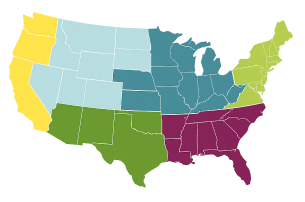
As with any crop, it is important to match cover crops to your winter hardiness zone. Some cover crops may be winter-killed in one region but go dormant in warmer climates. Likewise, plant hardiness varies by region, including both cold and heat tolerance.
American Meadows' cover crop product pages include information on the ideal regions to grow each species as well as USDA hardiness information.
Have questions? You can always contact us for recommendations and advice for planting the right cover crops.