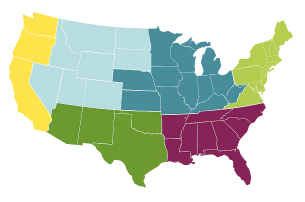
This unique native mix combines favorite native annuals and perennials of the Rocky Mountain region. Included are species for annual color like Indian Blanket, Clarkia and Fleabane, plus the much sought-after perennials like Colorado Blue Columbine, Showy Goldeneye, Purple Prairie Clover, and even Rocky Mtn. Cleome, or "Bee Plant."
As soon as your order is placed you will receive a confirmation email. You will receive a second email the day your order ships telling you how it has been sent. Depending upon your order date, we may hold your shipment to combine it with other products on your order, if applicable. See our shipping information page for approximate ship dates and more detailed information. If you have any questions, please call Customer Service toll-free at (802) 227-7200 or contact us by email or chat.
Overall rating: 4.4545455 / 5 from 11 reviews.
Review topics: ["color","results","summer","flowers","garden","seeds","wildflowers"].
"Though it has been an exceptionally hot and dry summer in the Billings area, the plants have taken root and bloomed. Watered as instructed and more so during 100+F days and they faired well."
"I've been gardening for over 50 years and have planted a lot of seeds! This particular product was a dismal failure. I've got a lot of cosmos, and what I would consider weeds, and nothing else growing from your selection. If I wanted cosmos, I would've bought a cart load of cosmos seeds! To be fair, I live at 6800 ' elevation. Humidity is very low, and I did wet down the area at least twice a day. Still pathetic results!"
"This is a review of the second year with the Native West Wildflower Seed Mix. The original review was entitle ""So Wild I Had To Fence Them In"". Flowers that showed up for the first time the second year were Blue fax, Rocky Mountain penstemon, smooth aster, and purple prairie clover. Birds brought in seeds for Dentatus when they visited the garden. Flowers returning for a second year were Blanket Flower, Black-Eyed Susan, Globe Gilia, and Plains Coreopsis. The only thing I did to prepare for the second season was to cut down the flowers in mid-Fall last year. The flowers were so thick I used an electric hedge trimmer. I'll be using the electric hedge trimmer this year too. A few photos are attached, please note the garden is not in all it's glory with these photos. Note: I purchased an app (Picture This) to help me identify some of the flowers, especially the volunteer flowers."
"I planted these in late Spring/early Summer, which was a little late. Additionally, an exceptional drought and extreme heat hit pretty hard almost immediate after I planted the seeds. I did water them almost everyday. A downside was that the neighborhood jackrabbits thought this blend was an excellent buffet that I planted just for them. I had to put a 3 foot fence (2 foot fence was too short) around the flowers to prevent the jackrabbits from eating the whole garden flat. Once I did that I began to see real progress, Flowers that bloomed included deerhorn clarkia, plains coreopsis (a jackrabbit favorite!), blanket flower, indian blanket, globe cilia, white evening primrose, browneyed susan, and showy goldeneye. I did get a few ""Jubilee"" variants of the blanket flower too. I did not need the entire 1/4 pound of seed to the 8x16 foot area I seeded."
"I thoroughly prepared one area and had great results. The other area, I did not prepare as well, and the results were less than stellar. I will prepare better for my spring meadow."
"We've been planting wildflowers in New Mexico for two years now. Ever year gives us more color and the birds love us. The little yellow finches come to eat some of the seed, and the bees are happy, too. We get to enjoy the color, which has lasted all summer."
"I have had a difficult time finding a mix that would grow in my high altitude, shady yard. The wildflower mix provided a complex and beautiful display. It was not too irresistible for the deer and elk. I can't wait until next year to see how the garden wintered over."
"Must be patient for color to fill in. Love perrenials!"
"The seeds took well in several different Nevada climates, and as described they were safe for our alpacas. I asked what product would be safe and was given a very large well investigated amount of information from American Meadows. I wish that the alpacas would have let the plants grow so I could see them flower, but they keep them mowed down. I'll have to put a barrier up next year."
"This is the second year for my wildflowers, and with a young dog, some areas have been trampled. Others are so pretty with the different flowers growing profusely, that I am getting more seeds to do more areas and replant some old ones! I was just telling my son this morning that I need pictures of the flowers, they are so colorful and pretty!"