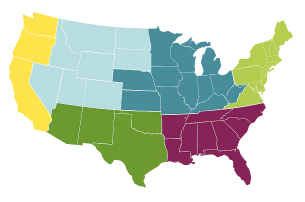
The Illinois Native Wildflower Seed Mix is a thoughtfully assembled collection of wildflowers chosen specifically for nativity, performance, and ecological value in Illinois's climate and soils, from the glacial lake plains and Grand Prairie of the north to the rolling hills and river bottoms of the Shawnee Hills in the south. The base mix brings together ten proven native performers, including Purple Coneflower, Black Eyed Susan, Butterfly Weed, Bee Balm, Swamp Milkweed, Eastern Red Columbine, New England Aster, Spotted Joe Pye Weed, Stiff Goldenrod, and Common Evening Primrose, delivering continuous color from spring through hard frost and genuine food and habitat value for Illinois's pollinators and wildlife.
Sized by square footage rather than weight, it takes the guesswork out of planning, whether you are covering a small garden bed or transforming a larger open area. Each size contains a different quantity of base mix scaled to your coverage area, but every order includes the same five bonus seed packets regardless of size. Because these rare species are small-seeded, expensive to source, and impossible to guarantee at a consistent rate when blended into a bulk mix, they are included as individual packets so that every single customer receives a full, generous quantity of each one!
Every species in this mix was hand-selected for its performance in Illinois conditions, its value to the local food web, and its contribution to a planting that stays interesting from spring through hard frost. The five bonus packets are where this mix goes above and beyond: each one features a rare, unusual, or ecologically exceptional Illinois native that you are unlikely to find anywhere else, packaged individually so you can place each species exactly where it will do its best work.
What's included in your five bonus packets:
Blazing Star Seeds (Liatris spicata) — A reliable and low-maintenance native, Blazing Star draws bees, butterflies, hummingbirds, and seed-eating songbirds across a long display season, and doubles as a striking cut flower. Tall, densely packed purple bottlebrush spikes open from the top down in midsummer for a dramatic, long-lasting display that is hard to match in the late-season garden. A fixture of Illinois's native prairies and wet meadows.
Early Sunflower Seeds (Heliopsis helianthoides) — One of the longest-blooming natives in the Illinois flora, Early Sunflower produces cheerful, golden-yellow daisy-like blooms from early summer well into fall, outlasting most other native composites by weeks. A confirmed larval host for the Silvery Checkerspot butterfly, it provides nectar for bees and butterflies across an exceptionally long season and feeds Goldfinches and other seed-eating birds from its seedheads in fall.
Grey Headed Coneflower Seeds (Ratibida pinnata) — A tall, airy native prairie perennial with long, drooping yellow ray petals surrounding a distinctive grayish-brown cone that releases an anise scent when bruised. Blooms from midsummer through fall, carries a special value designation for native bees from the Xerces Society, is a confirmed larval host for the Silvery Checkerspot butterfly, and feeds Goldfinches and other songbirds from its seedheads well into winter. A quintessential Illinois prairie species.
Lemon Mint Seeds (Monarda citriodora) — A cheerful, fragrant annual native to Illinois prairies and meadows, Lemon Mint produces tiered whorls of lavender-pink flowers on upright, square stems from late spring through summer. The lemon-scented foliage is a pleasure in the garden and useful in the kitchen as an herb or tea. It carries special value designations for both native bees and bumblebees from the Xerces Society, draws butterflies and hummingbirds in numbers, reseeds reliably, and makes an excellent and unusual cut flower.
Sky Blue Aster Seeds (Symphyotrichum oolentangiense) — Among the most drought-tolerant of the native asters, Sky Blue Aster produces abundant clusters of pale blue to lavender-blue daisy-like flowers with yellow centers from late summer through October. Carries a special value designation for native bees from the Xerces Society, serves as a larval host for the Silvery Checkerspot and Pearl Crescent butterflies, and feeds Wild Turkeys, Ruffed Grouse, and Tree Sparrows from its seedheads into winter.
*Your base mix and bonus packets can be planted together in the fall. If planting in spring, cold stratify the bonus packets, then incorporate them into the mix and sow.
As soon as your order is placed you will receive a confirmation email. You will receive a second email the day your order ships telling you how it has been sent. Depending upon your order date, we may hold your shipment to combine it with other products on your order, if applicable. See our shipping information page for approximate ship dates and more detailed information. If you have any questions, please call Customer Service toll-free at (802) 227-7200 or contact us by email or chat.